









Neptune project: advanced technologies for thick composite structures
The Neptune project combines optimised multiaxial reinforcements with an energy-efficient infusion process and advanced digital technologies to achieve high mechanical performance and reduced environmental impact for thick marine composite structures. The project involves Crazy Lobster, Saertex, Ifremer and K-Challenge.
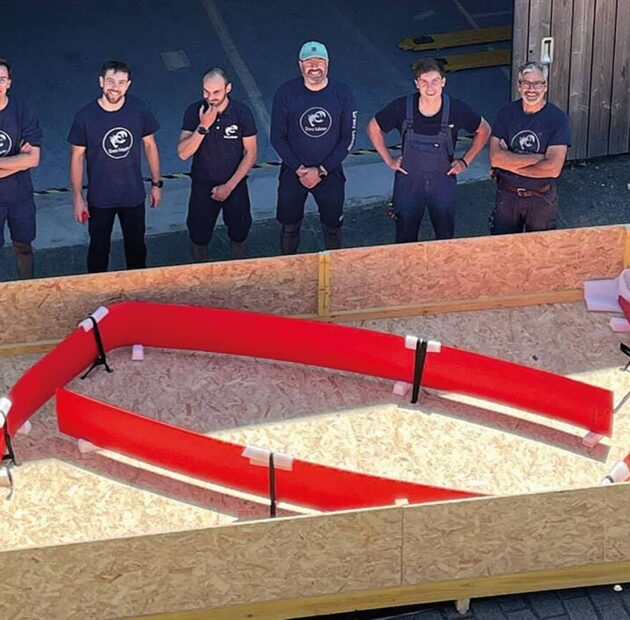
Over the past decade, composite materials have transformed the way marine structures are designed and built. From ocean racing to offshore energy, the demand for lightweight yet durable components continues to grow. At the same time, environmental regulations and production costs are driving the need for more efficient manufacturing methods.
Foils, masts and other thick-section composite parts become essential for performance at sea, yet their production is complex and energy-intensive. Conventional prepreg or Automated Fibre Placement (AFP) technologies often require long curing cycles in autoclaves, limiting part size and increasing cost.
To address these challenges, the Neptune (New Eco-composites for the Production of Technologies Useful to Ships and Energy) project brings together industry and research partners to rethink composite manufacturing for marine and energy applications. The goal: achieve high mechanical performance with reduced environmental footprint and improved process reliability, especially for thick composite structures.
A collaborative approach to composite innovation
The project runs over 24 months, from 2025 to 2027, and brings together complementary expertise along the entire value chain, combining industrial know-how and academic research.
- Crazy Lobster, project coordinator, leads process industrialisation and tooling development.
- Saertex develops the Steady Plus UD, a new carbon reinforcement optimised for thick section infusion.
- Ifremer contributes testing and analytical know-how under marine conditions.
- K-Challenge provides real-world validation in sailing applications.
By replacing conventional prepreg and autoclave processes with a controlled low-energy infusion process, Neptune aims to make manufacturing more sustainable and accessible. Together, the partners want to demonstrate that advanced materials and optimised infusion processes enable a new generation of thick composite structures.
Read the rest of the article in JEC Composites Magazine n°167, pp.69-71.

Cover photo: The Crazy Lobster team with an infused carbon foil


You can create a free technological watch and keep you updated about all these subjects.
