









Aviv Levy, Founder and CEO of Aviv Innovations
JEC Composites Magazine spoke to Aviv Levy about his career in the aerospace, drones and smart mobility industries.
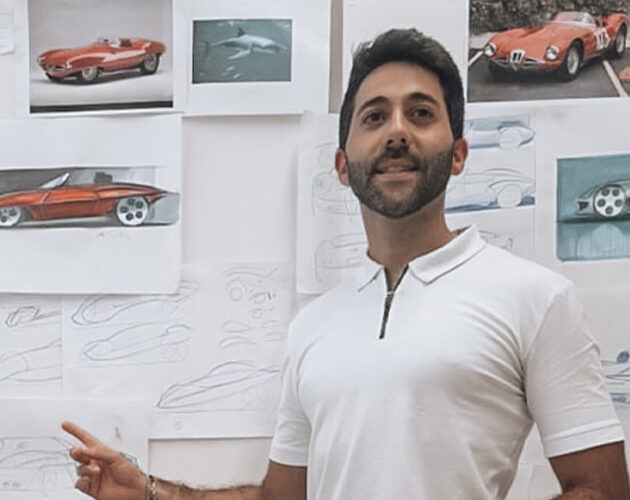
In recent years, the design of flying objects has opened up to private actors, different sectors and autonomous technologies, where the opportunities for innovation are enormous. Now, a new generation of engineers and designers creates unmanned aerial vehicles (UAVs), working independently. Aviv Levy, Founder and CEO of Aviv Innovations, specialises in UAVs and smart mobility, and runs his own private company.
JEC Composites Magazine: When did you develop an interest in flying objects?
Aviv Levy: “From an early age, I had the passion to create and to innovate something that has never been done before. At the age of eleven, I started my way in the field of drone helicopters, where I competed in accurate aerobatic manoeuvres competitions, called F3C, as a part of the Israeli team between the years 1999-2012. In the1999 World Championships I was featured in the Guinness World Records as the youngest competitor. Since then, I had sponsors from the companies who develop and manufacture these helicopters, and besides representing them in contests, I was their test pilot, reporting and brainstorming with the team about the upcoming products. About 12 years ago I was one of the pioneers who converted the helicopter from fuel combustion to electric.
The design inspiration came from the flowy outlines of a dolphin and an orthoptera. The dolphin has a streamlined body which helps its hydrodynamic efficiency in the water. Typically, the dolphin’s drag coefficient is estimated at about 0.014, which is extremely low. For reference, the typical value for a truck drag coefficient is approximately 0.6. Thus, the dolphin is 43 times more aerodynamically efficient than a truck. The orthoptera is known for its strong rear legs which help it to jump high.
After graduation at the Technion in Haifa, I founded a small startup developing autonomous drones for security, and an investor wanted to invest in us. But, feeling we were not mature enough, I decided to get some experience in the aerospace industry. Thus, I started to work for a well-known manufacturer in the composites field for the Israeli aerospace industry as a manufacturing engineer. It helped me a lot in understanding the process of taking a product and bringing it to mass production efficiently within all the constrains – what can be or cannot be manufactured, and why. This same manufacturer helped me to manufacture the Dolphin Drone. Later, as a system engineer, I felt I needed to specialise.
I have noticed that in the aerospace industry there are gaps of more than 40% in times and costs in most of the projects I was involved with because of the communications gaps between the different interfaces, i.e. the engineering company, the design studio and manufacturer. The aerospace industry is very traditional, whereas in our dynamic world there are innovative technologies that can be easily implemented in the aerospace industry and make the process more efficient. I felt that things could be done in a more efficient and accurate process, so four years ago I established Aviv Innovations. Today, as CEO of Aviv Innovations, I’m a consultant in the field of unmanned aerial vehicles, and an expert in designing advanced aerodynamic configurations. Aviv Innovations recently started to develop its own line of products. Some of them are going to be released to the market soon.
My motto for successful product development is that engineering, design and production must work harmoniously, and everything is done in-house with a special agile workflow I developed during the years.”

JEC Composites Magazine: Your inspiration comes from nature. Could you explain the practical applications of your UAV work in the real world?
Aviv Levy: “There are so many sources for inspiration. I like to observe nature. I find it very useful for aerodynamics platforms because most of the forms in nature have organic shapes, which is something that feels very right to me. Later, when we check it with CFD (computational fluid dynamics) simulations as well as in test flights, it shows that the first intuition to go to this direction was right and works well. Many modifications must be done to refine the solution for a specific problem, but for a first inspiration source, I find it extremely useful.”
JEC Composites Magazine: Do you think modern high-tech drones will replace pilots?
Aviv Levy: “The world is going towards automation. I know that some people fear this, but in my opinion it can only help. Automation cannot completely replace human beings, but it can help to accelerate and make processes more efficient. This understanding applies similarly for drones and manned aircraft. Autonomous flight is the future but cannot replace human beings 100% in areas like decision making.”

JEC Composites Magazine: CFRP, GFRP, which material do you choose for your projects and why?
Aviv Levy: “I like to experiment with many materials. I don’t think there is one material that is perfect for all uses. It really depends on the case. Most of the configurations I am working on have different materials for different purposes. Stiffness to weight ratio, flexibility and conductivity are some parameters that help me to choose which material would best suit the specific case.”
JEC Composites Magazine: How do you see the industry in 5-10 years’ time?
Aviv Levy: “This world is so fascinating. Every day I would like to know more. I am planning to keep developing in different R&D disciplines, to bring more successful products and technologies to the industry that will hopefully make the world a better and safer place. To achieve this, I would like to expand my team either organically over time or with the right strategic investor/VC partner that believes in the same values I represent. Either way, I know I will get there, it is just a question of time.”


