









Bell leverages Syensqo’s DDF and CYCOM EP2750 fast cure prepreg
Bell Textron, an aerospace and defence company, leverages Syensqo’s Double Diaphragm Forming (DDF) technology and CYCOM EP2750, registered trademark, to achieve high-rate production of its aerospace composite parts.
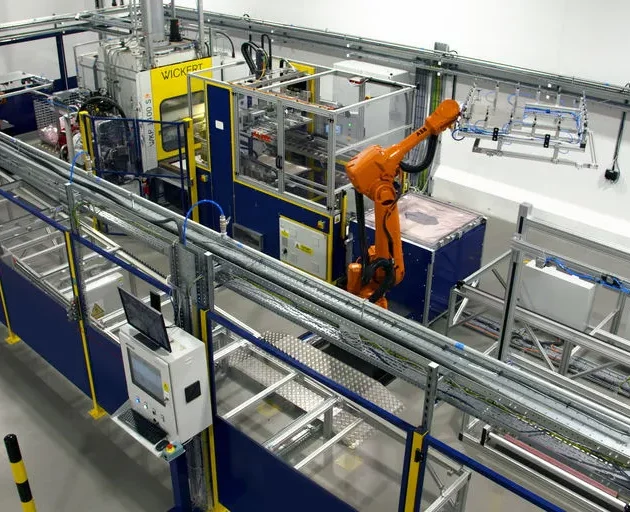
Headquartered in Fort Worth, Texas, Bell Textron is a wholly-owned subsidiary of Textron Inc. It operates in the military and the commercial aerospace sectors. It should be noted that, a year ago, the company selected Integris Composites as armor supplier for US Army’s future long range assault aircraft. Here, we will focus on the fact that Bell Textron is using Syensqo’s Double Diaphragm Forming (DDF) technology and CYCOM EP2750 epoxy resin system to industrialise composite part manufacturing.
DDF is a method automating dry fibre pre-forming, prepreg pre-forming or press moulding into a single-step process, which speeds up the cycle time involved in part making, while CYCOM EP2750 is a 350°F (177°C) toughened epoxy resin system trademark especially designed for high-volume cost-effective composite manufacturing in the aerospace sector, positioning itself as a cost-effective alternative to machined aluminium for small to medium size parts. CYCOM® EP2750 handles like standard prepreg, but it can be press cured to produce autoclave parts with very low porosity. Its mechanical properties are equivalent to other 350°F (177°C) autoclave-cured toughened epoxy prepreg systems and it is designed to accommodate flexible press cure cycles. CYCOM® EP2750 can also be cured in an autoclave if desired.
Bell early adopted the DDF process, coupled with the fast cure aerospace prepreg CYCOM® EP 2750. The aerospace company quicky industrialised these technologies, achieving high-rate production of its composite parts. The company therefore achieved reduced operational costs, waste, energy consumption and green-house gas emissions. In addition, DDF enabled the relief of autoclaves’ usage for curing small to medium size parts, reserving their use for larger parts.
“After more than 30 years our Syensqo-Bell relationship continues to bring innovative solutions to benefit the composite industry. Syensqo’s customer support model is based on the belief that design, material and manufacturing are all inter-related and key to a successful increase in composites adoption. Our teams are structured to support this model and customer collaborations are fundamental in working towards a more industrialized composites industry,” says Marc Doyle, Business Executive Vice-President of Syensqo Composite Materials.
Cover photo: source: Syensqo


You can create a free technological watch and keep you updated about all these subjects.
