









Fairmat to recover carbon composite panels from Airbus and work with several other fields
The French recycling deeptech has announced it had signed a contract with Airbus related to aeronautical composites circularity, but also with five other companies from other sectors: Babolat, Salomon and Team Pickleball for sports equipments, Etex for the building sector, and LaunchPad O&P and Billy Footwear for orthopaedic insoles.
Did you know that carbon composite panels constituted about 53% by weight of Airbus A350’s structure ? It does, and this figure helps to realise the impact that recycling that material would have. At JEC World 2026, Fairmat announced that at the end of 2025, it had signed a contract with Airbus to « explore new approaches for the disassembly and valorisation of carbon composite panels from the aeronautics industry. »
Under this contract, Fairmat is leveraging its expertise to work on carbon composite panels from aeronautical structural components, including wing structures and keel beam elements used on long-haul aircraft such as the A350. To recover end-of-life carbon composite panels, the French deep tech company uses its Infinity recycling technology which, unlike other more traditional processes, allows these materials to be reused without mixing them with virgin fibres, while guaranteeing comparable mechanical performance. This solution is competitive with the use of virgin fibres and results in a significantly reduced carbon footprint compared to new materials.
Reintegrating the recovered materials into future aerospace applications
The partnership between Fairmat and Airbus is part of a research-driven initiative to explore circular reintegration solutions for carbon composite panels, with the objective of reintegrating them into future industrial applications, particularly in the aerospace sector.
The partners plan to assess the conditions required to recover high-quality composite material and to evaluate its potential for reuse in demanding industrial applications. The sector studied will be aerospace in particular, where performance, reliability and traceability requirements are very high.
“By combining Fairmat’s technology with the standards of a leading aircraft manufacturer, we aim to transform end-of-life aircraft structures (such as A350 wing panels) into high performance materials for reintegration into aerospace applications,” says Benjamin Saada, CEO and founder of Fairmat.
Entering the construction sector
At JEC World 2026, Fairmat also announced partnerships with other companies in the sports, medical and building sectors. First, it signed a contract with Etex, a Belgium-based global manufacturer of building materials and a pioneer in the field of lightweight construction. The two companies aim to explore new technological avenues for integrating recycled carbon composites into various construction applications that still rely heavily on metal or carbon-intensive materials. They will begin by seeking substitutes for fastening components, which are traditionally made from anodised aluminium or steel. These substitutes should improve the essential properties of fasteners, such as corrosion resistance and thermal insulation. The partners target at least a 50% reduction in carbon footprint compared to aluminium.
“Construction is a key sector for Fairmat: it’s where our technology has a massive and lasting impact. Collaborating with Etex means partnering with a first‑tier industrial player capable of turning materials innovation into concrete, large‑scale solutions. Together, we are laying the foundations for a new generation of sustainable composite materials for construction,” says Benjamin Saada, founder and CEO of Fairmat.
With Etex, Fairmat enters the construction sector, which accounted for 37% of global CO₂ emissions in 2022. With this partnership, Fairmat aims to make insulation and structural material standards evolve across all types of buildings. Besides, the deeptech also aims to deploy recycled carbon composite materials at scale.
Sports: combining high performance and sustainability
Fairmat also announced two new collaborations in the sports industry, at a time when carbon fibre dominates the market for modern sports equipment (for example, carbon fibre tennis racquets represent approximately 64% of global sales vs. 22% for aluminium racquets). The French advanced carbon‑composite recycling company signed a contract with Babolat, a French tennis, badminton and padel equipment manufacturer, to integrate recycled carbon composites into racquet‑sport equipment, demonstrating that durable materials could meet the demanding requirements of high‑level sports equipment. Fairmat’s recycled carbon composites offer interesting properties in terms of lightness and stiffness while preserving feel and performance during play.
“True innovation means questioning ourselves and rethinking equipment from the earliest stages, integrating eco‑design principles without compromising the performance at the heart of the game. With Fairmat, we are moving toward genuinely sustainable performance by combining low‑impact materials with technical expertise. This collaboration paves the way for future, more sustainable innovations designed across the entire product lifecycle,” says Aldric Bourgier, Chief Innovation & Development Officer, Babolat.
Fairmat has also signed an industrial partnership with Salomon, a French brand specialising in ski and trail running equipment, aimed at integrating Fairmat Carbon, an infinitely recyclable composite made from reclaimed carbon fibres, into the core structures of alpine skis, Nordic skis and snowboards. In addition to being high-performing, Fairmat composites are designed to withstand extreme conditions, cold temperatures, repeated bending and impacts, making them particularly suitable for winter sports.
“Working with Salomon marks a major milestone for Fairmat. Collaborations with brands operating at this level allow us to develop recycled materials that meet, and sometimes exceed, the performance standards of modern skiing. This partnership lays the groundwork for a new generation of winter sports equipment that is both more responsible and more capable,” Benjamin Saada, Founder & CEO of Fairmat.
Fairmat has also announced a new partnership with the registered trademark Team Pickleball. The French deeptech is bringing its recycled carbon fibre technology to the fastest-growing sport in the world through Team Pickleball’s Protect Our Play initiative. Concretely, Team Pickleball is integrating Fairmat impact surfaces into their very first paddle, turning recycled carbon fibre into a high-tech asset. Fairmat’s ‘precision-engineered surfaces’ are expected to ensure that the touch, strength or durability of the equipment is not lower because the material is sustainable.
Medical sector: translating composite material innovation into tangible clinical benefit
Fairmat also partners with LaunchPad O&P, a US-based company specialising in low-profile orthotic components and solutions, and Billy Footwear, a US-based shoe manufacturer, to develop a recycled carbon composite footplate for orthotic care in the US. The collaboration reflects the increasingly numerous bridges between high-performance materials and healthcare applications, mechanical precision and reliability being central in both scenarios.
The primary objective of this joint initiative is to normalise gait mechanics while making medical device applications more sustainable. LaunchPad had identified the significant need for optimised footplate stiffness. Fairmat is utilising recycled carbon composite from aerospace to ensure the footplate’s high-performance stiffness and durability, while Billy Footwear ensures the footplate is seamlessly integrated into the shoe, achieving the required stiffness while maintining fit, comfort and accessibility.
The resulting carbon composite structure is designed to optimise energy transfer during movement. Its controlled mechanical performance enables clinicians to fine-tune orthotic support with greater accuracy. In addition, the use of recycled composite materials and streamlined production processes help to reduce the cost of the device, thereby broadening access to advanced orthotic solutions.
Fairmat is exhibiting on JEC World 2026, in Hall 5, booth M39.
Updated on 30 March 2026
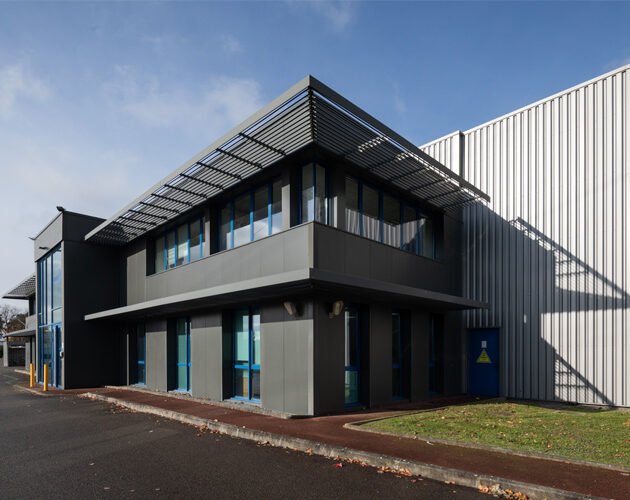
Cover photo: Fairmat’s carbon fiber composite materials recycling plant in Bouguenais, France


You can create a free technological watch and keep you updated about all these subjects.
