









First recyclable surfboard with basalt fibers, circular epoxy and rPET
Basaltex developed in partnership with Yuyo.surf and R*Concept a fully recyclable surfboard.
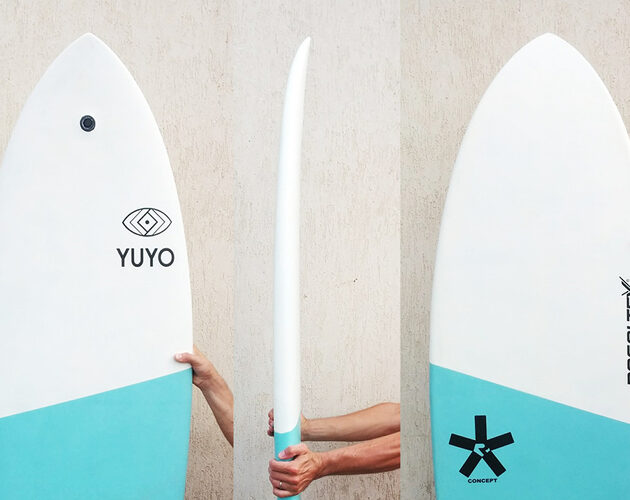
The end-of-life issue remains an important theme for composites. This question arises in particular for composites for maritime recreational use such as boats, surfboards, etc. End users embrace nature and also wish to practice their sport in a sustainable way.
The surfboard industry has been relying on non-recyclable materials since 60 years now, based on PU cores, PES resins and fiberglass that will end up in landfills at its end-of-life of every surfboard. Basaltex, R*Concept and Yuyo present a fully recyclable solution based on a recyclable bioepoxy solution, basalt fibers reinforcement and recycled PET core.
Yuyo designed a 5’6 fish surfboard model that is called TURBOT. ”It’s one of our best sellers”, explains Romain Paul, founder of Yuyo surf, “a retro looking board made for high speed and carving turns”.
How it’s made
Basalt fibers are produced from only basalt rock without the addition of chemicals. These ecological fibers are used by Basaltex for the development of high-performant fabrics for composites. Unique to these fabrics is their combination of strength and impact, and being effectively 100% recyclable towards new identical fibres by re-melting and drawing new fibers.
The Recyclamine technology of R*Concept will allow to approach a complete different model of surfboard manufacturing, where every board can come back to its manufacturer to be disassembled and give a new purpose to each material. All the materials can be used after the recycling procedure, based on the chemical and mechanical processes.

The core structure of the custom designed surfboard is 3D printed by Fused Deposition Modelling. The recycled PET used comes from 100% post consumption plastic waste. This additive manufacturing process enables to use the strict amount of material necessary, without generating any additional waste. Once 3D printed and assembled, the rPET structure is laminated by hand with a combination of Basaltex fabrics and Recyclamine resin technology.
A fully recyclable solution
“Working with the new recyclable bioresin was quite similar to other bio-epoxy resins and the mechanical end result with the basalt fiber is really good”, commented Romain Paul, “a high performance surfboard combining hardness and flex.“
Recycling of the surfboard by dismantling and separation to its basic building blocks: PET core, basalt fabric and resin; is made possible thanks to the so-called programmed crosslinks.
Degradation takes place under very mild conditions without the use of high temperatures or aggressive, harmful solvents. This makes this method very feasible and applicable on a larger scale.
“The surfboard is glassed with Recyclable Sei Whale powered by Recyclamine technology”, explained Jordi of R*Concept. “At its end-of-life, we are able to completely dissolve the resin and reuse the core and reinforcements for new applications. The former thermoset resin will become a thermoplastic epoxy after the recycling process, that can also be used in other manufacturing processes.”

Once delaminated, the rPET core is shredded into flakes and then melted into a new filament for 3D printing use. It can be used to produce a new surfboard core structure.
“Unique to this mild recycling is the recovery of the reinforcement as a fabric.” adds Wouter Verbouwe, Technical Manager at Basaltex. “Because of basalt its excellent acid resistance, the fiber and fabric retain their integrity and are reused after rinsing and drying as a reinforcing fabric with similar properties.”
The choice of materials, the 3D printed design and the mild recycling method, offers an accessible route for the recycling and reuse of composites in recreational applications.
Want to get more information about this fully recyclable solution based on a recyclable bioepoxy solution, basalt fibers reinforcement and recycled PET core, visit Basaltex, R*Concept and Yuyo website.


You can create a free technological watch and keep you updated about all these subjects.
