









The Vibes project takes thermoset recycling a step further
The Vibes European research project, set up under the European Union’s Horizon 2020 framework programme for research and innovation, has made significant progress towards improving the recycling of thermoset composites.
Improving the recycling of thermosets through the development of bio-based composites using recyclable epoxy resins, lignin-based carbon fibres and natural flax reinforcements. This is the aim of the Vibes research and innovation project, launched in 2020 under the European Union’s Horizon 2020 framework programme for research and innovation.
A new decisive step has just been taken in the project with the resin-infusion manufacture of a carbon fibre panel made from bisphenol-free epoxy resin reinforced with natural fibres. Manufactured by Irish company Juno Composites, the panel uses advanced biosourced and recyclable epoxy resins combined with lignin-based carbon fibres and natural flax reinforcements.
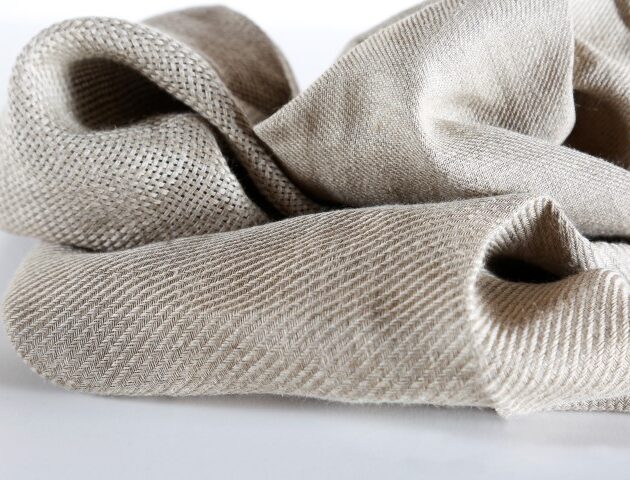
French company Specific Polymers supplied the bio-based epoxy resins, while Belgian company Flipts & Dobbels, a member of the Alliance for European Flax-Linen & Hemp, supplied its Flaxco high-performance flax reinforcements to improve the recyclability of thermoset composites.
From seed to fibre
Juno Composites has used these materials to manufacture test composite panels, comparing them with panels made from commercial epoxy resins and linen textiles. The company has also explored the impact of the moisture content of natural flax textiles on mechanical performance. By developing industry-specific drying strategies to reduce the moisture content to less than 1% (compared with the usual 13-15%), the mechanical performance of flax-reinforced composites has improved considerably. “This project demonstrates that to fully realise the potential of flax fibres in performance composite applications, all aspects of the entire flax fibre production process, from seed selection to textile manufacturing, should be considered”, said Caroline Flipts, Managing Director of Flipts & Dobbels, which has more than a hundred years’ experience in working with flax and has been collaborating on the Vibes project for 4 years. The mechanical tests produced promising results, demonstrating the potential of Vibes composites to match or even surpass traditional materials, while offering significant environmental benefits. This research, which took place in parallel with some of the work of the Alliance’s European Scientific Council on moisture sensitivity, ‘emphasizes the need for relying on the technical know-how of flax reinforcements manufacturers’, stresses the Alliance for European Flax-Linen & Hemp in a press release.
Vibes is a 48-month research and innovation project with a budget of nearly €5.3 million (US$5.76 million), funded by the Bio-Based Industries Joint Undertaking (BBI – JU) as part of the European Union’s Horizon 2020 framework programme for research and innovation. Its aim is to solve the end-of-life problems of thermosetting composite materials by developing a new green technology based on the controlled separation and recovery of composite material components through the development of customised bio-based binding materials (BBMs). The composite materials developed are currently being validated based on sector-specific requirements and are intended for engineering applications in the construction, aeronautical and marine sectors.
Cover photo: Alliance for European Flax-Linen & Hemp


You can create a free technological watch and keep you updated about all these subjects.
