









Smart composites enabled by coextrusion carbon fibre additive manufacturing
Additive manufacturing is widely employed in the production of complex, customised and multifunctional components. This technology encompasses 7 distinct categories, one of which is Fused Deposition Modelling (FDM). The FDM process involves extruding a polymer material – doped or not – through a nozzle onto a build platform. Over the past decade, this technique has evolved to incorporate continuous fibre deposition, significantly broadening the scope of possibilities in additive composite manufacturing.
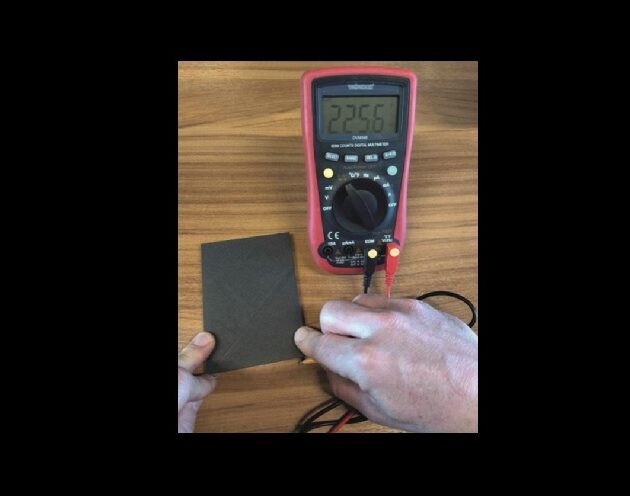

A drawback of additive manufacturing is the internal integrity of fabricated parts, which impacts their mechanical properties. Due to the inherent nature of the process, a zero-defect strategy is challenging to implement in additive manufacturing. This necessitates the development of methods to ensure the reliable performance of mechanical parts. The use of smart materials to enable self-diagnosis of a mechanical part is therefore a valuable approach, allowing real-time monitoring of the part’s structural health.
Creating self-sensing composites
A smart material is a reactive material that alters its properties in response to environmental stimuli like temperature, stress or light and reverts to its original state when the stimuli are removed. This reversible behaviour makes it ideal for adaptive applications such as sensors, actuators and self-healing systems.
The Science and Technology Research Unit focuses on utilising the electrical properties of continuous carbon fibre embedded in 3D-printed parts to create self-sensing composites. This approach eliminates the need for doping raw materials by using the carbon fibre itself as a sensor to monitor structural health through changes in resistivity under stress.
The research unit employs the Anisoprint Composer A4 3D printer, which uses coextrusion technology to simultaneously print continuous carbon fibre and a thermoplastic matrix. The dual-nozzle system enables precise placement of the fibre, optimising both mechanical and electrical properties of the printed part (Figure 1).

Various fibre placement strategies
Once the connection was established, the research team explored various fibre placement strategies for embedding continuous carbon fibre into the polymer matrix during the 3D printing process using coextrusion technology. The fibre was positioned along paths similar to strain gauges, allowing the printed part to provide real-time feedback during tensile tests. 2 primary configurations were studied: U-shaped and W-shaped paths (Figure 2). Key parameters varied in the study including infill density (10% or 30%), the number of carbon fibre layers (2 or 4) and the fibre configuration, where the U-shape represents one round trip through the part, while the W-shape corresponds to 2 round trips.

These configurations enabled the assessment of how different fibre alignments and the number of fibre layers impact both mechanical strength and the sensitivity of the resistive signal (Figure 3).

Findings of the study
This research highlights several key findings:
- Mechanical enhancement: the inclusion of continuous carbon fibre significantly improves the mechanical properties of 3D-printed parts, particularly increasing tensile strength and Young’s modulus. A double layer of carbon fibre enhanced mechanical performance by over 700 MPa compared to parts without reinforcement, with the W-shaped fibre configuration providing even greater strength.
- Self-sensing capability: the electrical properties of the carbon fibre enabled the printed parts to act as sensors, detecting structural deformation. Tensile tests showed a linear relationship between resistivity and deformation in the elastic zone, making carbon fibre a reliable indicator of stress. However, in the plastic deformation zone, the signal became less predictable due to fibre slippage or breakage within the matrix.
- Electrical signal analysis: the study analysed electrical resistivity under mechanical loading, with the Gauge Factor (GF) calculated for different configurations. The U-shaped fibre had a higher sensitivity (GF of 0.717) compared to the W-shaped configuration (GF of 0.503). The W-shaped configuration offered more consistent mechanical reinforcement, while the U-shape showed greater strain sensitivity.
- Mechanical vs. electrical trade-offs: the study identified a trade-off between mechanical strength and electrical sensitivity. Increasing carbon fibre layers enhanced mechanical strength but reduced signal sensitivity. However, careful optimisation of fibre placement and configuration allowed a balance between strong mechanical properties and effective self-sensing capabilities.
Conclusion
The study successfully demonstrated that continuous carbon fibre can be used in FDM to create multifunctional, self-sensing parts without the need for doped materials. This approach not only reinforces the mechanical properties of the printed parts but also integrates carbon fibre as a sensor for structural health monitoring. The findings have significant implications for industries such as aerospace, where there is a demand for lightweight, strong and self-monitoring materials.
Acknowledgements
This research is being carried out with the support of the Walloon Region, as part of the SKYWIN ICOM2C3D research project, under grant number 8820.


You can create a free technological watch and keep you updated about all these subjects.
