









Advancing sustainable epoxy systems for the wind energy sector
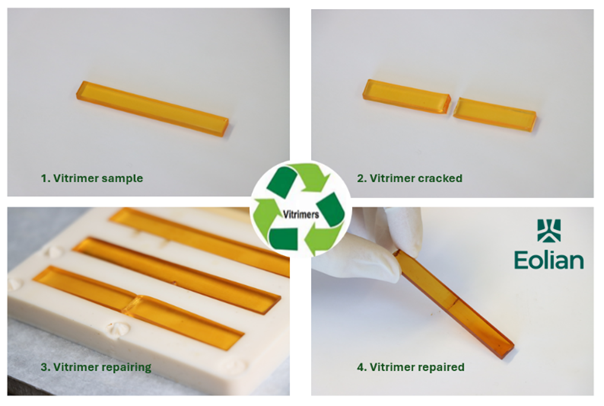
In the pursuit of more sustainable materials for wind turbine blades, the EOLIAN project’s Work Package 2 is dedicated to developing innovative bisphenol A-free epoxy systems derived from biobased precursors. These next-generation materials are designed to exhibit advanced functionalities thanks to the presence of dynamic covalent bonds, which impart exceptional properties such as repairability, reshapeability and recyclability.
The collaborative efforts of project partners PROPLAST, TEKNIKER and AEP Polymers are paving the way for the development of these cutting-edge materials, addressing the challenges associated with meeting the stringent performance specifications required for their application in the wind energy sector.
A key focus is ensuring that these materials are suitable for the production of high-performance composites via resin infusion techniques.
Progress and breakthroughs in EOLIAN
Since the launch of the EOLIAN project in June 2024, significant progress has been made in the formulation of vanillin-based polyimine vitrimer resins. These resins are synthesised using epoxidized vegetable oils and vanillin-derived Schiff bases with varying chemical structures.
The introduction of these bio-based vitrimers marks a major step forward in the development of environmentally friendly thermosetting materials, offering a promising alternative to traditional epoxy resins.
One of the most exciting breakthroughs so far has been the demonstration of composite recyclability. Preliminary results indicate that a simple hydrolysis process is sufficient to break down the vitrimer matrix, allowing for the efficient separation of the reinforcing fibre. This innovation holds significant potential for the circular economy, as it facilitates the recovery and reuse of composite materials, reducing environmental impact and material waste.

Next steps: composite development and performance evaluation
The newly developed vitrimer resins will be utilised by Politecnico di Milano (POLIMI) to fabricate basalt fibre-reinforced thermoset composites at the coupon level. These composites will then undergo rigorous characterisation to assess their mechanical, thermal and durability properties. The goal is to benchmark their performance against conventionally used glass fibre epoxy composites, following the specifications provided by NORVENTO, a key industry player in renewable energy solutions.
The insights gained from this research will not only contribute to the development of more sustainable composite materials but also enhance their potential adoption in the wind energy industry, where recyclability and sustainability are becoming increasingly critical.
Towards a greener future
The work being carried out within WP2 represents a significant step forward in the development of high-performance, eco-friendly epoxy systems. By leveraging biobased precursors and dynamic covalent chemistry, the project is unlocking new possibilities for sustainable composite manufacturing.
As EOLIAN progresses, further research and testing will help refine these formulations, ensuring they meet the demanding requirements of industrial applications while minimising environmental impact. With growing global emphasis on green energy and circular economy principles, these innovations could play a transformative role in the future of sustainable materials for the wind energy sector and beyond.
Cover photo: Vitrimers are repairable


You can create a free technological watch and keep you updated about all these subjects.
