









Carbon copy: new method of recycling carbon fibre shows potential
An UNSW Canberra researcher has developed a new method to recycle carbon fibre in a way that not only means less of the material is wasted, but also uses less energy and leaves more of it intact and able to be turned into more useful new products.
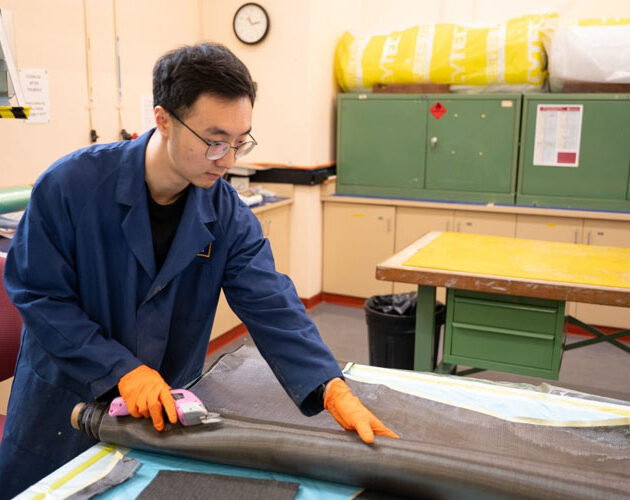
“This project was a collaboration with our partner in the automotive industry who wants to investigate building cars out of recycled carbon fibre,” explained Dr He. “But with the previous methods of recycling carbon fibre, the material was heavily compromised. The mechanical performance of objects made from the existing recycled fibres is degraded by 80 to 90 per cent, compared to using new fibres. Typically, it is only reused to make low-value products like tables or chairs, products that don’t experience heavy forces or loads. The existing method of recycling involves shredding the composite, which destroys the carbon fibre, before heating it to remove the plastic. After it has been shredded, the fibres look like individual hairs or cotton wool strands.”
“In our method we don’t shred the carbon fibre and we optimised how we heat it in a furnace, Dr He continued. This leaves the fibres intact, and therefore the new product made from the recycled carbon fibre is much stronger. Our method degrades the carbon fibre by less than 30 per cent, which is a 50 per cent improvement on existing methods.”
While the recycled carbon fibre produced using Dr He’s method is not yet able to be used to construct a car, it is significantly closer to that goal than before. The new and improved recycled carbon fibre can potentially be used to construct individual parts of a car, such as a roof.
Carbon fibre is a costly product to make, which explains the appeal of recycled carbon fibre, in addition to the environmental benefits. Recycling carbon fibre requires one-tenth of the energy needed to produce it from scratch.
One of the lead researchers from the UNSW Canberra Advanced Manufacturing Research Group, Associate Professor Matthew Doolan, said that as the world progressed with engineering and technological advancements, it needed to think more about reducing waste.
“As we make more advanced products we also make them from significantly more advanced materials, and as a result we are creating problems at the end of the life of that product, Associate Professor Doolan said. The standard practice of just dumping these products, or burning them, is unsustainable and cannot continue forever. Exploring other options available to us is one of the key questions we’re hoping to help answer at UNSW Canberra.”
Dr He and Associate Professor Doolan, along with their collaborators, recently published their findings regarding recycling carbon fibre in the journal Composites Part A: Applied Science and Manufacturing.


You can create a free technological watch and keep you updated about all these subjects.
