









Obsolete composites find a second life with Clean Sky’s RESET project
Yesterday’s composite aircraft parts that are beyond serviceable standard have the chance to be reincarnated into new components for the airliners of the future, thanks to Clean Sky’s RESET project.
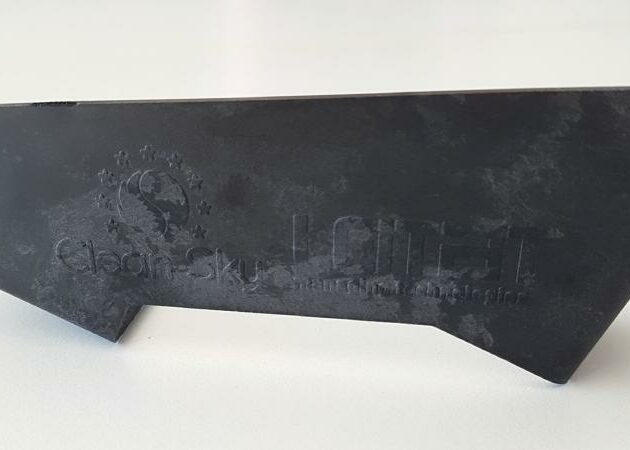
For decades, aircraft reaching the end of their operational life have been stripped down for parts, and some components refurbished and recertified – aluminium can often be recycled into lower grade products, such as drinks cans. But with the increasing use of composite material in today’s airliners – for example, the Airbus A350XWB airframe structure is 53% composite by weight compared to 25% in the A380-800 (and compared to just 5% in the A310-300 of 1985) – it’s environmentally essential to find a solution for the recycling of aircraft thermoplastics.
Specifically, PEEK (Polyether ether ketone) and PPS (Polyphenylene sulphide), usually reinforced with carbon fibre, are the most common high per formance materials considered as leftovers when their lifecycle has come to an end. These materials were the subject matter of Clean Sky’s RESET, a project which ran from January 2016 until December 2017, coordinated by the Leitat Technological Institute based in Barcelona, which took on the challenge – with some surprising results.

”RESET was part of the Eco-Design activities under AIRFRAME ITD and the id ea here was to recycle some parts of the aircraft which were made from composite” explains Clean Sky’s Project Officer Elena Pedone. ”The RESET team at Leitat have managed to recycle previously used aircraft composite material and from it they’ve manufactured some parts and then they compared the commercial ones versus the recycled ones. Following some analysis they observed that, actually, the recycled parts have similar mechanical characteristics; therefore the technology developed in this project could be realistically commercialised in the aeronautic sector in the next few years and possibly spilled over to other economic sectors”.


You can create a free technological watch and keep you updated about all these subjects.
