









VAP membrane systems meet high environmental standards
Certificate according to Standard 100 by Oeko-Tex confirms human ecology safety of VAP membrane systems from Trans-Textil and Composyst.
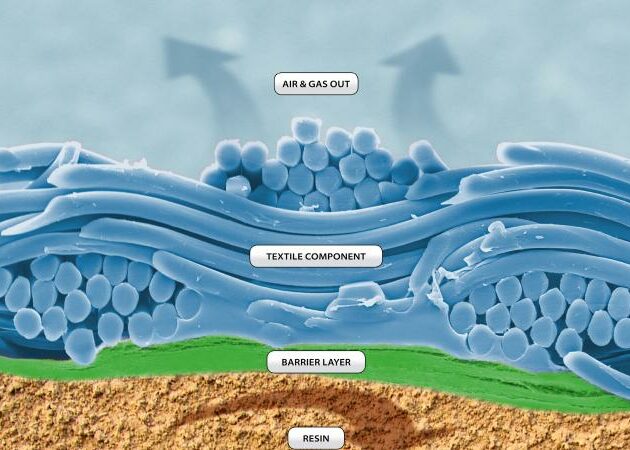
Whether fuel savings in the mobility sector or the production of rotor blades for energy production from renewable sources – the environmental concept has always been a key motivation in lightweight construction. Increasingly, component manufacturing itself, for example in the field of auxiliaries, is being questioned with regard to its life cycle assessment. With the certification of VAP membrane systems, 3D ready-mades, multi-layer systems and flow media according to the latest criteria of the Standard 100 by Oeko-Tex, Trans-Textil and its partner Composyst once again demonstrate the high environmental standard of their vacuum infusion products.
The Standard 100 by Oeko-Tex is an international, independent testing and certification system for textile products. It certifies the human ecology safety as well as the conformity with all currently valid limit values in part far beyond the legal requirements.
Ecologically responsible action over the entire product life cycle from the use of controlled raw materials to disposal plays a key role for Trans-Textil in order to avoid undesirable effects on humans and the environment. For example, the exclusive manufacturer of VAP membrane systems intentionally avoids the use of polluting substances such as organic solvents or PFC (free from perfluorinated and polyfluorinated compounds) in the manufacture of its semi-permeable functional product CS/E and uses alternative formulations based on water. Free of substances classified as hazardous, the products ensure a high level of occupational safety as well as the lowest emissions during production and use and meet the specific environmental programs of the users.
The functional textiles “Made in Germany” are specially developed for use in the Airbus patented VAP process and thus combine a sophisticated technical performance profile, reliable process function and a high tolerance for various resin systems with ecological responsibility in the overall concept. For Trans-Textil, this also includes the use of the latest energy-efficient systems, close monitoring in cooperation with the authorities at the Freilassing location in the vicinity of the Berchtesgadener Land National Park and the company’s long-standing certification to the international environmental standard ISO 14001.


